Kaneva
Kaneva was a social network built around an online virtual world, where your profile came to life in 3D.
- Role
- Creative Director
- Years
- 2006–2008
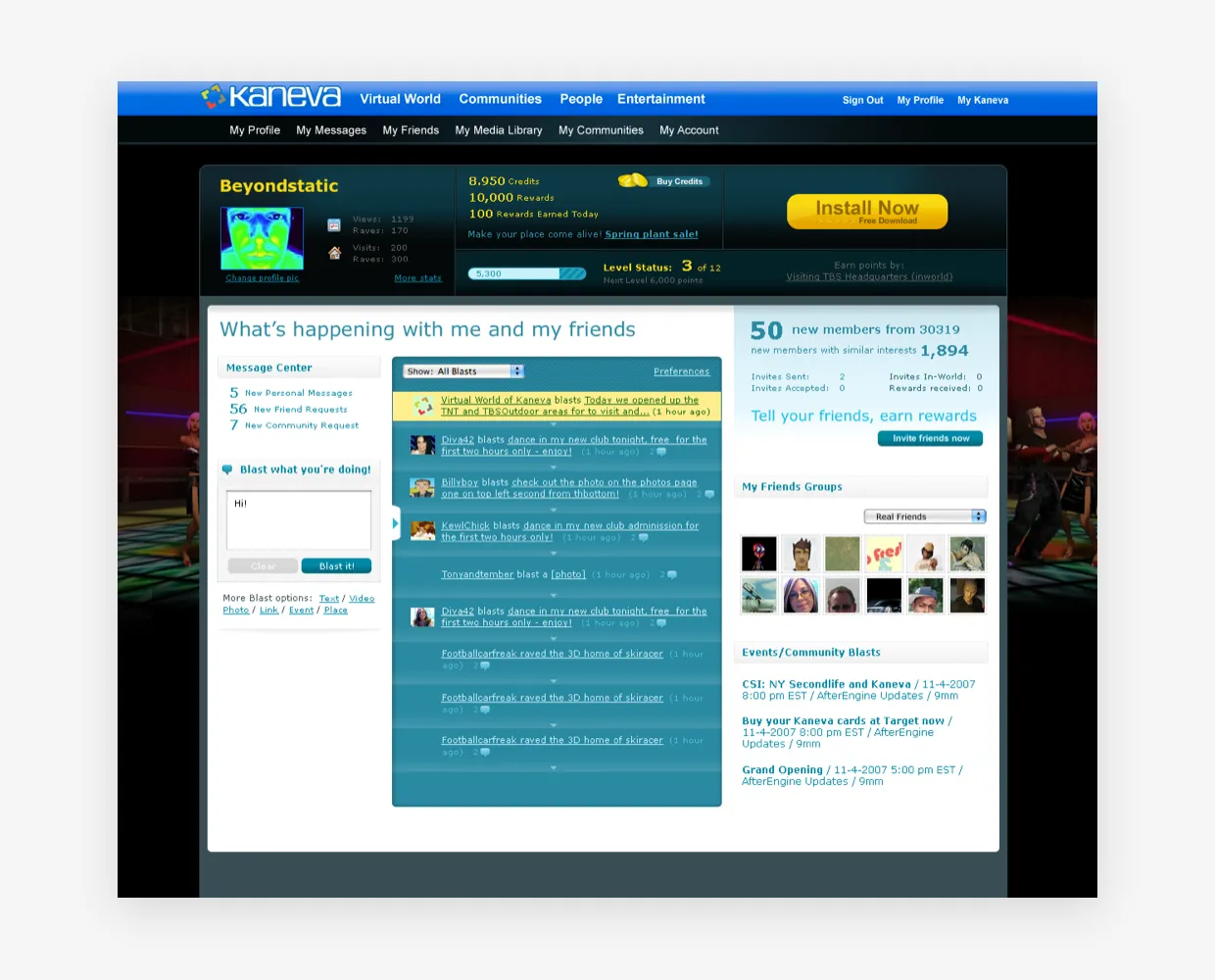
Kaneva was a social network with an online virtual world attached. The idea was that your online profile didn’t stay on a web page. It came with you into the world. Your photos hung on the walls of your own virtual apartment, and your videos played on its TV.
At Kaneva I led the digital marketing and the in-world game UI.
Inviting people into a 3D world
The landing page explained the world in three ideas: create your 3D self, customize your home, and explore your world. Customizing your home was where the social network showed up: members could bring in their music, videos and photos from their Kaneva profile and play them on their own virtual TV and audio system. The page also showed how members could earn credits to upgrade their homes and avatars, and it invited game developers to build on the platform.
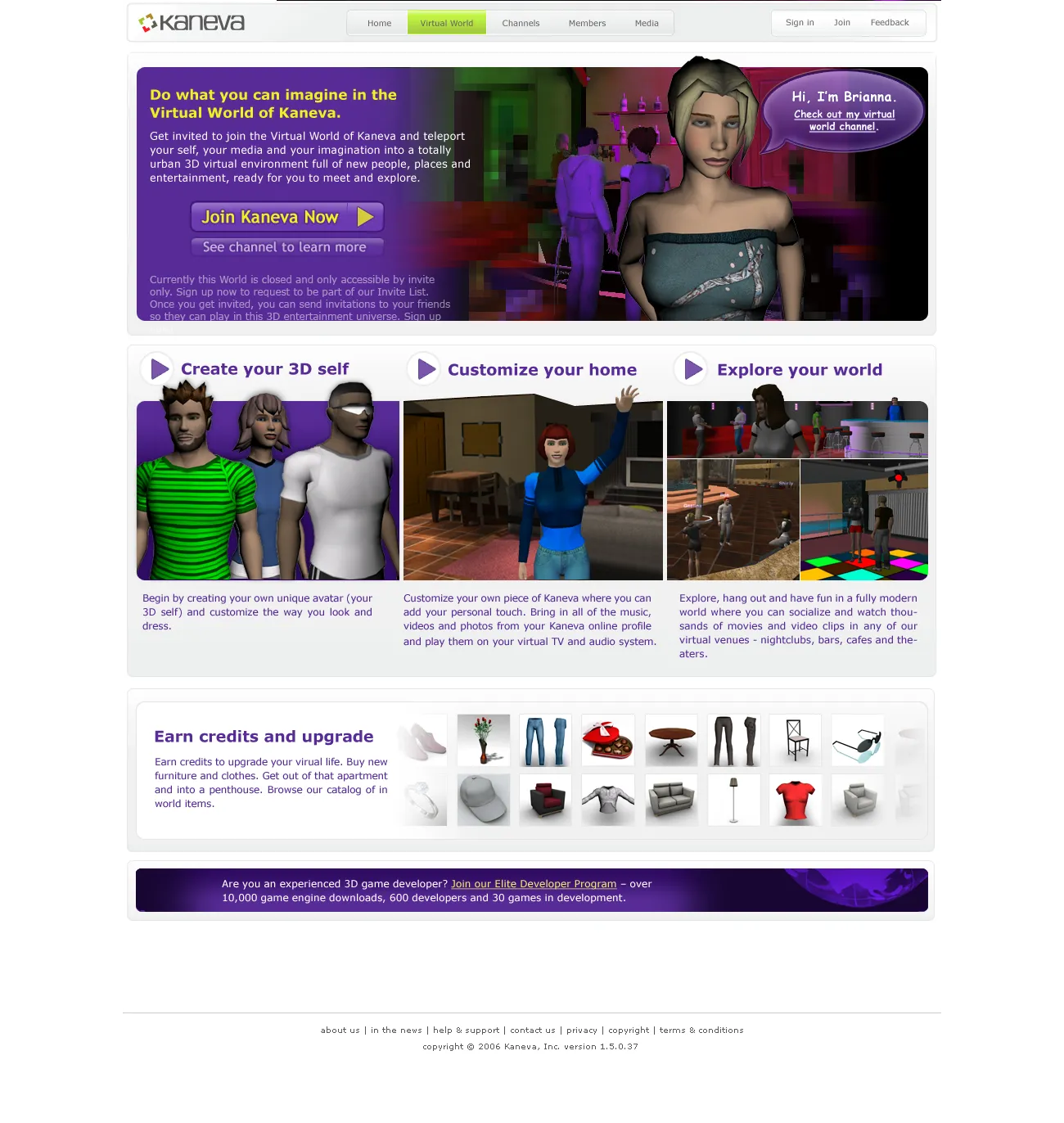
The landing page for the Virtual World.
A home page for every member
My Kaneva was each member’s home on the web, and the social network side of the product. It showed their level and their credits, a feed of blasts from friends, invitations, communities, and a calendar of events. It’s also where your profile lived before it followed you into the world. I explored two visual directions for it.
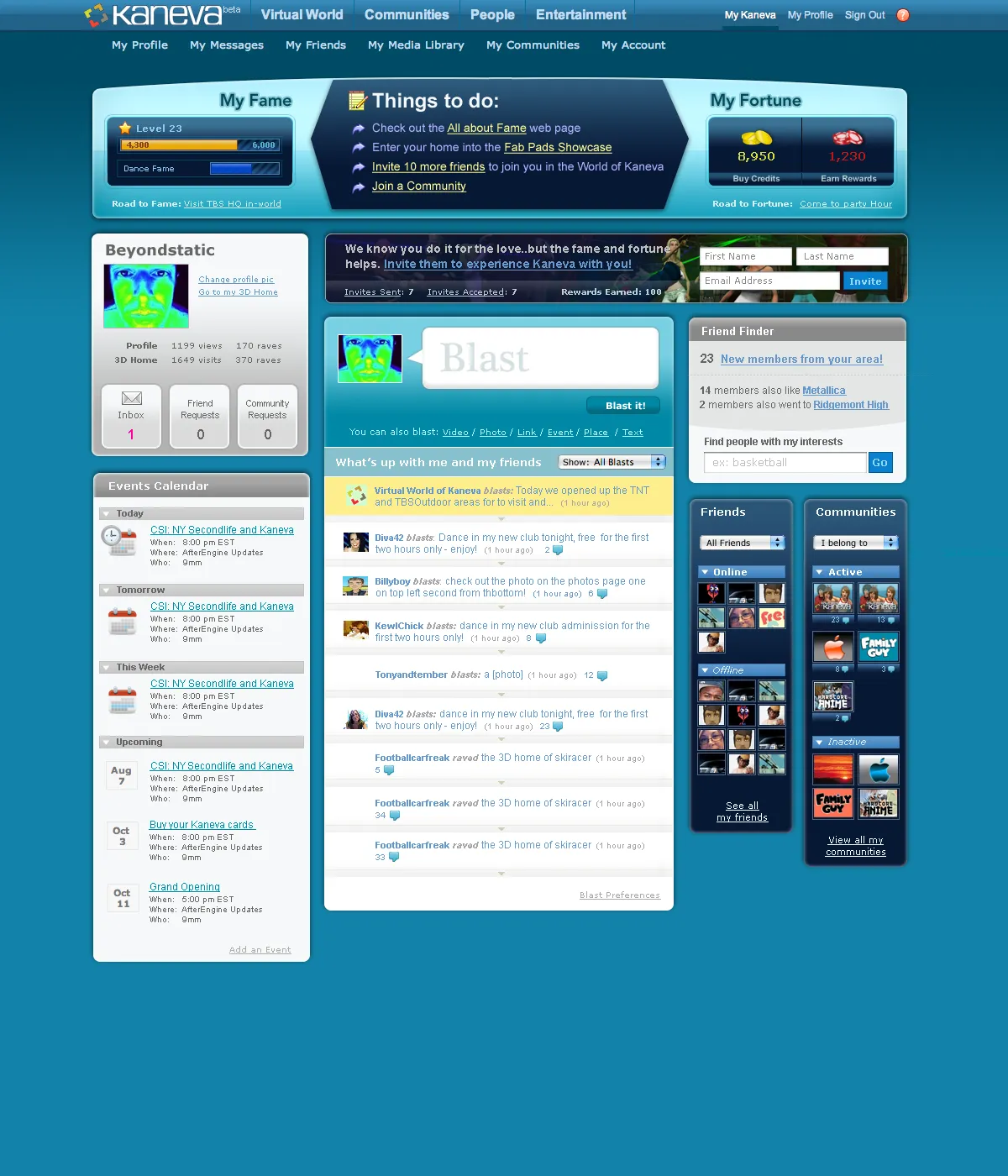
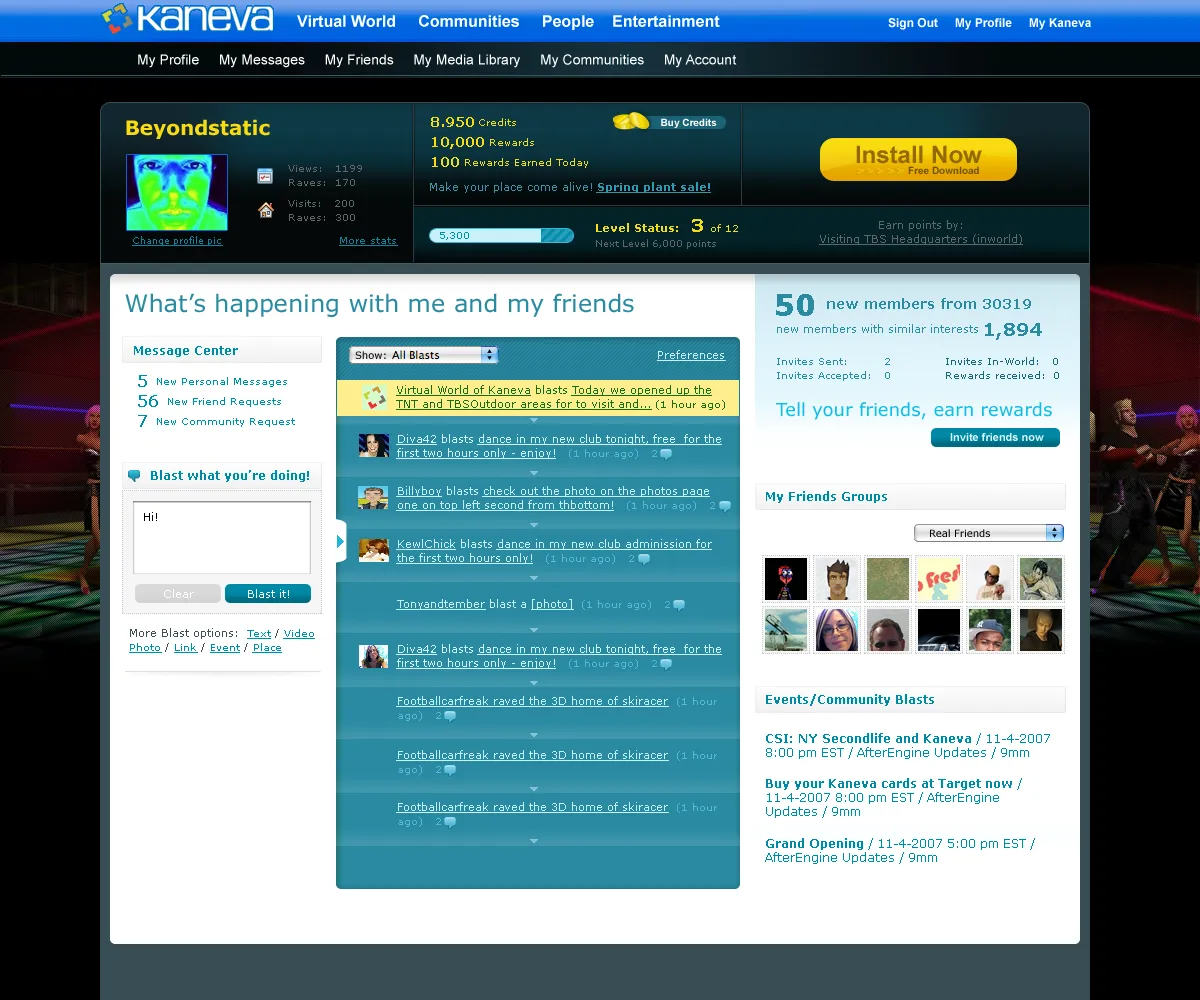
Two directions for the My Kaneva home page.
Credits, and cards at Target
Members spent credits on items for their avatars and homes, and buying more was a four step flow: choose an amount, select an address, confirm the purchase, and view a receipt. A limited move-in package bundled credits with furniture and a T-shirt.
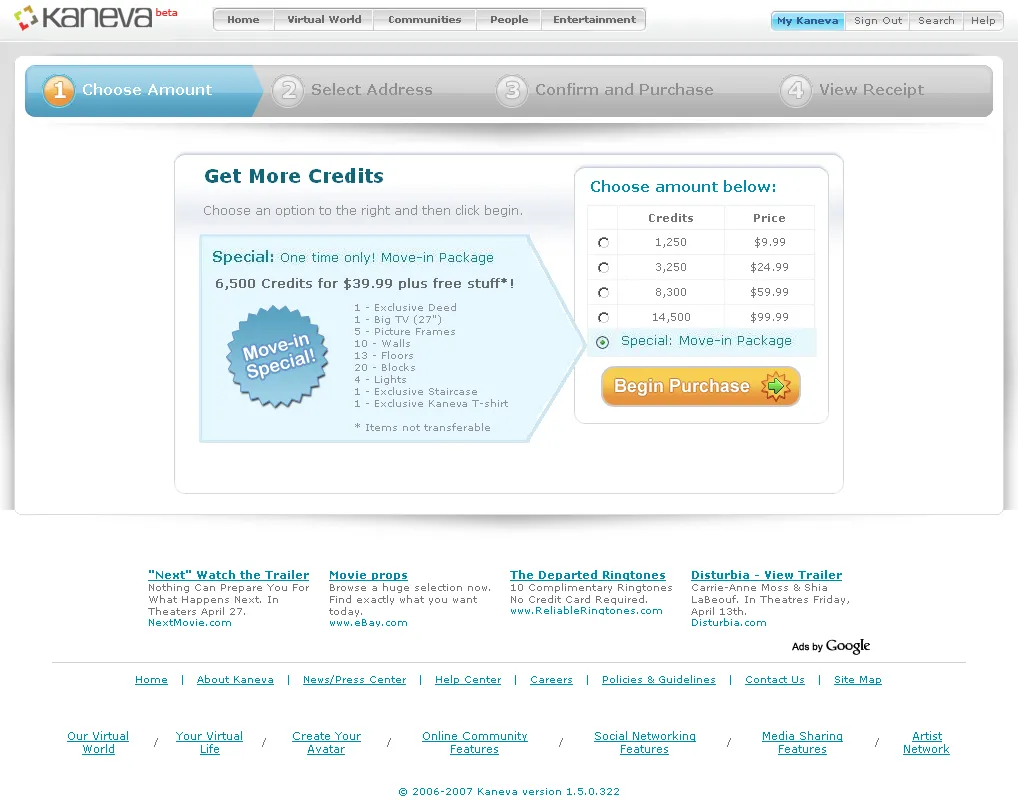
Step one of buying credits.
Credits also came on a card. Kaneva’s prepaid in-game currency cards were sold nationally at Target, so a player could buy credits off a shelf and redeem them online. This one is a $25 card for Dance Party 3D, worth 4,500 credits.
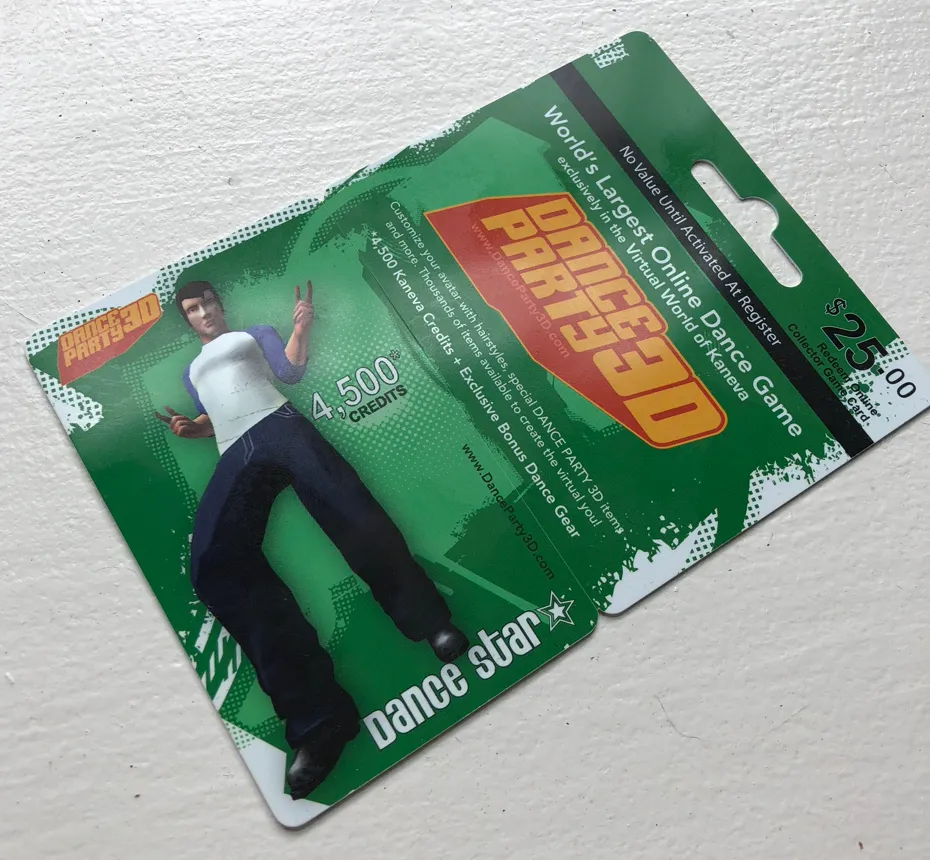
A prepaid card, sold at Target.
Pitching the platform to developers
Kaneva also wanted other people to build games in the world. This site made the case to game developers for building in 3D, and introduced the Kaneva Star Platform.
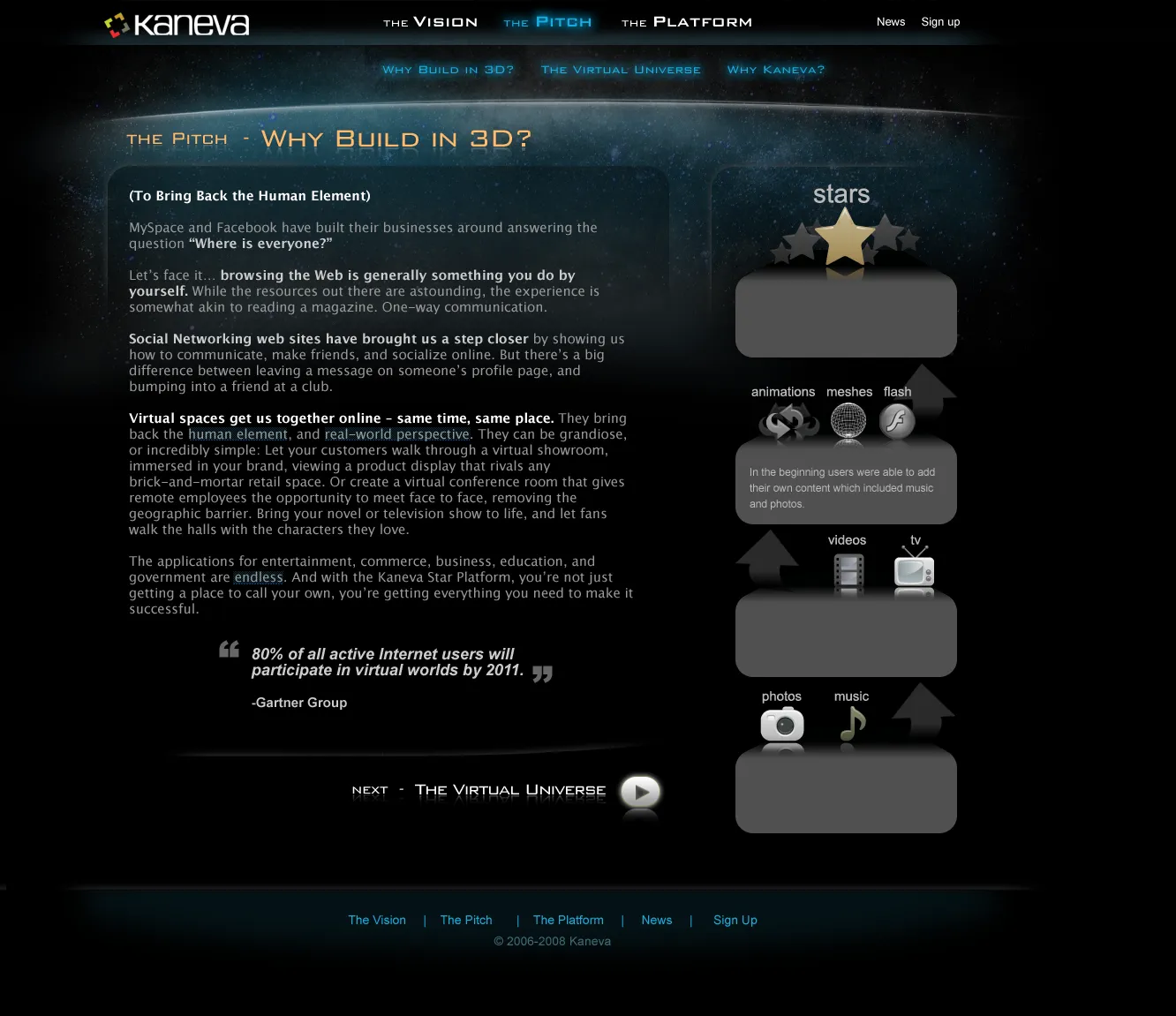
The developer site, and its pitch for building in 3D.